
Silicon Run has been producing award winning educational films about semiconductor and computer manufacturing since 1986, with its two most recent films exploring the exciting fields of Nanotechnology and MEMS (microelectromechanical systems). Each film features live industrial footage and illustrates technical processes using vivid animations and graphics. All Silicon Run titles are available on DVD and by streaming. »read more
about Silicon Run Productions
our films
Show your electrical engineering, computer science, and IC manufacturing classes how manufacturing has both changed and stayed the same.
In all the years since Silicon Run first came out, I don’t think anyone has made anything comparable. Even though automation and robotics technology has improved dramatically, and advances in litho and euv optics have pushed feature sizes down, the fundamentals in your videos are as relevant today as they were when you first made them.Faustin Carter, Physicist, 2024

NanotechnologyThe World Beyond Micro
The world of nano dimensions and a growing number of engineered nanomaterials.
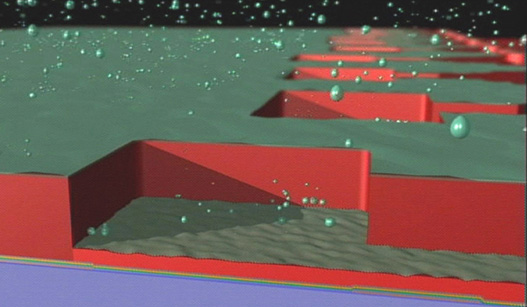


Silicon Run IISemiconductor Mfg, Part 2
Fabricated wafer through testing, packaging, and computer manufacturing.

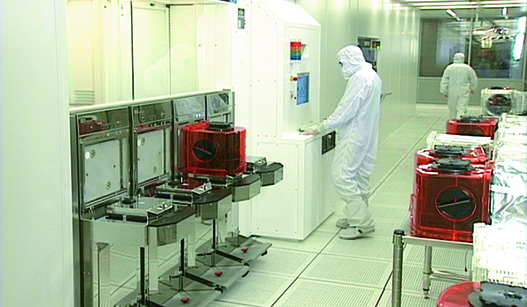
The students and I appreciated Silicon Run Lite very much. It is well done and suited for the classes I teach. I appreciate your efforts to make this information available to young people in an effective presentation.Mrs. Linda M. Wilkins
Strathcona Christian Academy
Sherwood Park
Alberta, Canada
Extremely well done. It is very informative to see the creation of chips at this extremely low level.Gerald I. Isaacs
Carroll College
Exceedingly well done. The style of the film truly does portray the culture of the semiconductor industry: it’s quick, driven, modern, high tech, visually exciting, well paced – a very nice artistic change from most teaching films. Because the process shots are interspersed with device animations, students are able to quickly relate processes to device physics. This immediate tie between the macroscopic and microscopic worlds is impossible to obtain in a traditional lab/classroom setting. Even the most personal tour of an IC facility would not allow students such an intimate view of each process.Carol McConica
Chemical Engineering
Oregon State University